
USA RISE Up: What happens when a trailblazing PE teacher tries something new?

Kirk Hamel’s story at Veterans Memorial - How a Rhode Island PE teacher is helping young people understand their feelings, build trust and reconnect through movement.
KEY IMPACT:
109% increase in Kirk’s adapted student wellbeing observation score for nine students (11/40 to 23/40)
Progress across all eight indicators, with thinking clearly moving from “None of the time” to “Often”
8 percentage-point improvement in School Wellbeing Scorecard, from an already strong 73% to 81%
Deeper trust and connection, with students becoming more willing to share their feelings and accept support
This case study covers: First USA RISE Up Pilot | Movement Wrapped in Relationships | Co-Regulation and Belonging | RISE Up Sport Sanctuary | Emotional Check-Ins | Self-Care Toolkits | Working Alongside RULER | Learning Across UK and US Schools

Context
At Veterans Memorial Elementary School in Central Falls, Rhode Island, PE teacher Kirk Hamel is the trailblazer behind the first USA RISE Up partnership.
With nearly three decades of experience, he is testing how an approach developed in UK schools can transfer to a US school, what fits, what needs adapting and what adds value for his students.
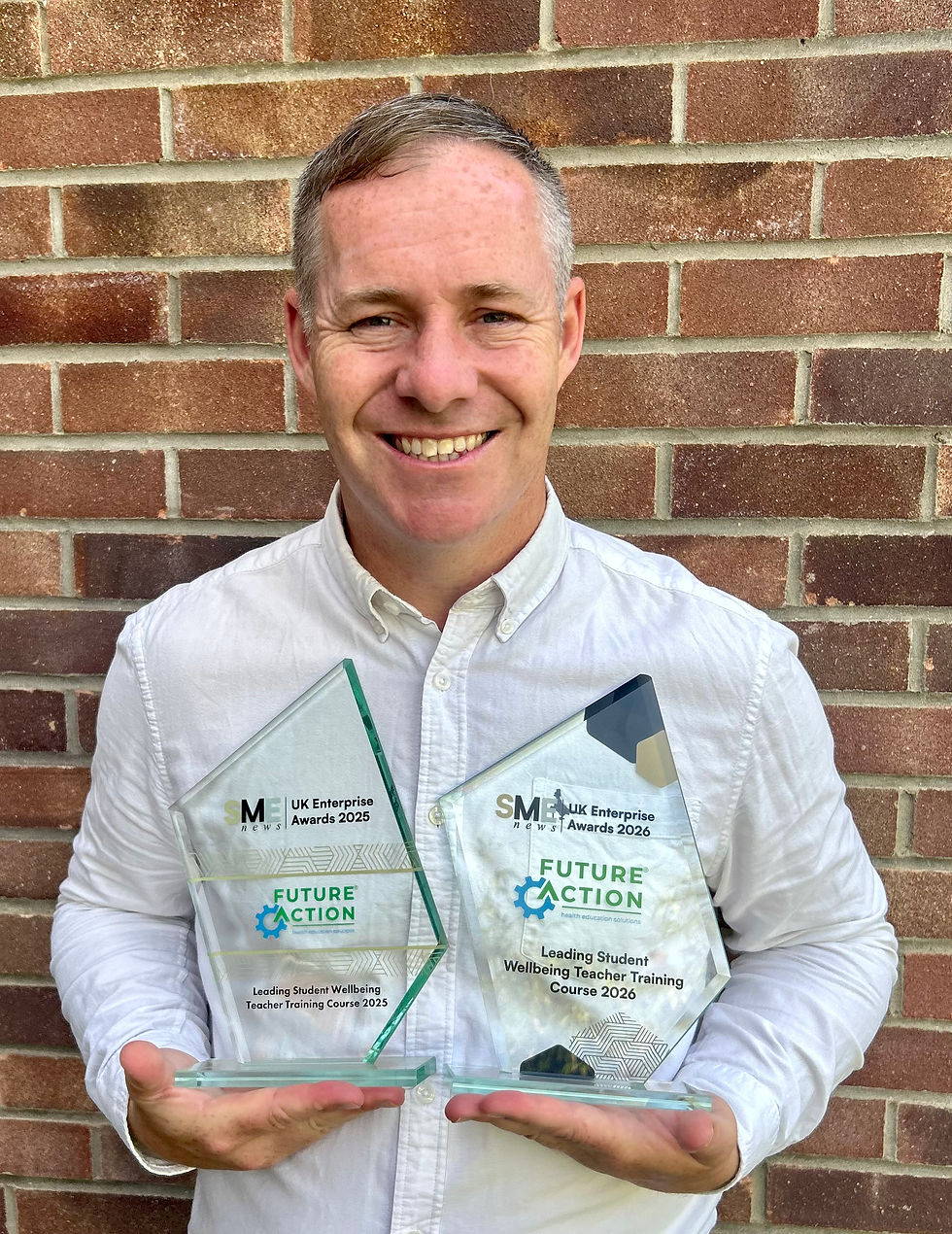
RISE Up is a customized school wellbeing partnership from Future Action, built around relationships, movement for regulation and belonging, and personal self-care toolkits to develop emotional intelligence. Its teacher training was recognised as the UK’s Leading Student Wellbeing Teacher Training Course in 2025 and 2026.
His gym is somewhere students come to move, laugh and play. It is also somewhere they can find an adult who knows them when the school day feels overwhelming. For one Grade 4 student, that relationship can make a considerable difference to how a lesson ends.
“At the end of my full 50-minute session, he’ll hug me and say he loves me.”
There are still difficult days. Moments like these keep Kirk looking for ways to help.
A teacher rooted in his community
Veterans Memorial serves approximately 400 students in a diverse, multilingual urban community. Kirk describes families bringing experiences and languages from across the globe:
“People from all over the world, all different languages.”
Some young people are navigating significant adversity. Others experience communication difficulties, sensory needs or overwhelming emotions that can make participating in school challenging.

Experience and a willingness to keep learning
Kirk brings deep knowledge of his community, an extensive collection of games and activities, and a willingness to keep learning.
His commitment to his students and community has earned recognition as 2026 Central Falls Teacher of the Year and a 2023 New England Patriots Difference Maker Award recipient.
His wider contribution has also been recognised through the Rhode Island Healthy Schools Coalition Spotlight Award, the RIGSO Maddie Potts Sportsmanship Award and his induction as a Central Falls Honorary Alumnus in 2026.
Yet he is much more comfortable talking about his students and the people who have shaped his teaching than his own achievements.
Kirk is also the author of Heart and Hardihood: Fortitude and Practical Strategies for the Urban Teacher, bringing together practical lessons gathered through years of teaching.
“For five years, every time I was teaching, I’d be like, ‘Oh, somebody’s got to know this.’ And I went and wrote it down.”
That same curiosity brought him to RISE Up. He recognised an approach that connected closely with his existing work:
“The RISE Up philosophy just fit exactly with what I was already doing.”

The intent of the partnership
Veterans Memorial already had trauma-informed practices and the RULER approach to social and emotional learning in place. Even with those foundations, Kirk could see students who needed more.
The initial partnership vision focused on Kindergarten. As he considered where the additional support could be most useful, Kirk shifted the targeted intervention towards nine students across Grades 2–5.
Some experienced overwhelming anger. Others struggled with personal boundaries, communication or significant social withdrawal. Several were already receiving specialist support. Kirk knew these young people well.
“These are my kids that I’ve had.”
Kirk wanted to help them recognise their feelings, feel safer in their relationships and navigate difficult moments.
The pilot also asked a wider question: which elements of RISE Up could an experienced US educator use, adapt and build upon within his own school? His knowledge of the students and the US setting would guide that learning.
Implementation through everyday practice
After completing the RISE Up training, Kirk began weaving the resources into PE, targeted support and the gym’s role as a sport sanctuary.
Movement, play and relationships were already central to his teaching. The useful additions were simple: more consistent emotional check-ins and greater attention to students’ awareness of their bodies.
At the start of a session, students lower their heads and briefly raise a hand as Kirk names different feelings.
“It’s a really quick check that you taught me how to do. Doesn’t take more than 10 seconds.”
What matters is how he responds.
“So I change the activity sometimes on my feet.”
Kirk draws on decades of experience to adjust the session to the young people in front of him.
INSIDE THE GYM | A typical Kirk USA RISE Up session A warm welcome. Kirk brings his energy and humour, helping students connect with him and the space. These warm cues of safety help children to feel psychologically safe. A quick emotional check-in. Students briefly indicate how they feel anonymously without having to explain themselves in front of their peers. A responsive choice of movement. Kirk uses that information to select or adapt games and activities. Support to recognise feelings. When needed, he helps students notice tension and other physical signals, giving them a starting point for understanding their emotions. Connection throughout. Familiar games, clear boundaries and reassurance give students opportunities to practise managing frustration with a trusted adult nearby. Kirk adapts the session to the group and the moment using activities from the 4 RISE categories (Repeaters, Inclusive Teams, Stress Busters or Energisers) |
Body scanning has also become part of his after-school running group, extending the practice beyond the nine-student intervention.
Alongside responding to behavior, Kirk is giving more attention to understanding students’ experience:
“What are you going through right now?”

Working alongside RULER
Kirk was keen to explore how RISE Up could enhance the school’s existing work. He values RULER’s emphasis on relationships and sees opportunities to bring emotional learning into the movement-rich environment of PE.
RULER AND RISE UP | How they fit together What is RULER? Developed at the Yale Center for Emotional Intelligence, RULER is a schoolwide approach to social and emotional learning. It develops five skills: recognising, understanding, labelling, expressing and regulating emotions. Tools include the Mood Meter, Charter, Meta-Moment and Blueprint. What is a RISE Up partnership? Future Action works alongside educators to co-create a bespoke wellbeing approach shaped around their school’s strengths, priorities and community. Relationships provide the foundation, with movement used to support regulation and belonging. From there, young people develop personal self-care toolkits to strengthen their emotional intelligence and ability to manage their wellbeing. Intent. Co-create a strategic vision and implementation plan around the needs of their young people. Implementation. Equip educators through staff training, practical resources and ongoing support to bring that vision to life. Impact. Review progress together and co-create a case study that captures the difference, celebrates learning and informs next steps.  What do the approaches share? Both support emotional awareness, relationships and regulation, helping young people understand their feelings and explore helpful responses. What is RISE Up adding at Veterans Memorial? Kirk is building on his existing strengths by using movement wrapped in trusted relationships to support co-regulation and belonging. Through the four RISE activity categories, Repeaters, Inclusive Teams, Stress Busters and Energisers, he adapts movement to help young people feel safe, settle alongside him and reconnect with others.  This adds a practical movement dimension to the school’s existing RULER provision, creating a foundation for developing emotional intelligence and personal self-care toolkits. Kirk is using the partnership to build on his existing strengths, bringing emotional check-ins, body awareness and self-care strategies into PE, active games and his sport sanctuary. RULER supports the school’s wider emotional learning; Kirk’s RISE Up work creates further opportunities to practise those skills through movement and connection with a trusted adult. Learn more about the approaches |
Early impact
Kirk already connected with his students through fun and movement. The change he describes is in the emotional depth of those relationships.
Students are becoming more willing to share how they feel. He has more opportunities to understand what they are experiencing and respond.
Asked what he valued most about the RISE Up resources, he chose:
“The emotional check-ins and the simplicity of it all.”
A 109% rise in Kirk’s student wellbeing observation score
In just two months, Kirk’s overall rating of the nine-student focus group more than doubled, rising from 11/40 to 23/40.
Behind that figure are young people he sees becoming calmer, more connected and better able to handle difficult moments. His rating for thinking clearly moved from “None of the time” to “Often”.

The questions were adapted from the Warwick–Edinburgh Mental Wellbeing Scale (WEMWBS), an internationally recognised questionnaire exploring positive feelings and everyday functioning, including optimism, clear thinking and connection with others.
School Wellbeing Scorecard from 73 to 81 percent
In just two months, the School Wellbeing Scorecard rose from an already strong 73% to 81%, an increase of eight percentage points.
Alongside this, Kirk reported deeper emotional connections and more deliberate use of check-ins, body awareness and movement. He says these additions are influencing his teaching across approximately 400 students.


One young person’s experience
Behind those figures are individual moments of progress. For one Grade 4 boy, an important step was beginning to recognise anger and accept help from Kirk.
STUDENT VIGNETTE | “Yeah, I’m angry.” When overwhelmed, this student could find it difficult to engage safely with others. The gym offered somewhere to access support from an adult he knew. Kirk helped him pay attention to what was happening in his body and put a name to the feeling. “He started to realize, ‘Yeah, I’m angry.’” That recognition gave them something to build upon. “Planting that seed has gotten him to come to the gym and want to hear and talk about how he feels.” Familiar movement games created opportunities to practise navigating frustration. During a tagging game, the student could look towards Kirk for guidance through a short pause before rejoining. By the end of a PE session, Kirk describes a young person calm enough to offer a hug and tell him he loved him. The student continues to need support. Kirk recognises that other professionals and changes in provision are contributing too. Within that wider work, their relationship provides opportunities to practise self-awareness, accept support and reconnect through play. |

What comes next
The next phase is about supporting students’ self-care strategies and following their progress, while learning more about transfer between the UK and US systems.
Kirk’s feedback will help identify what fits readily, what needs adapting and what support US educators may need.
He has already identified practical additions, including printed visual resources for the gym and staff spaces.
Sharing the learning
On November 20, Kirk and Future Action founder Neil Moggan will share the pilot at the New York State PE conference: the early findings, Kirk’s adaptations and what they are learning about bringing a UK-developed approach into a US school.

For school and district leaders, this first pilot offers an early example of how RISE Up can be adapted within a US setting. It is a starting point for further learning across different schools and districts.
Kirk’s experience is central to that learning. He brings the judgement to recognise what is useful, adapt it to his school and see where further development is needed.
Kirk’s four tips for getting started with USA RISE Up
1. Start with a body scan.
Help students notice discomfort, consider what might be causing it and identify the support they need.
2. Keep emotional check-ins quick and discreet.
Try a heads-down, eyes-closed check-in, with students raising a hand to indicate how they feel.
3. Adapt your opening “stress buster” game.
Choose activities that help students regulate and get ready to learn.
4. Finish with connection.
Use brief conversations as exit tickets, prioritising students needing emotional support. Coordinate with their classroom teacher if more time is needed.
Your next step
Where could your school make the greatest difference
Kirk started with a strong foundation and a clear sense of which young people needed more support. What might that starting point look like in your school?

Take three minutes to reflect on your current provision, recognise your strengths and identify opportunities to strengthen support for your young people.
Want to be a USA RISE Up Trailblazer
Veterans Memorial is our first USA RISE Up partner school. We’re looking for innovative educators, schools and district partners across the USA who share Kirk’s commitment to helping young people feel safe, connected and better equipped to manage their wellbeing.
We’ll partner with you to build on what you already do well, shape an approach around your community and help you measure and celebrate the difference.
Complete the form and we’ll be in touch to hear about your school or district and explore what a partnership could look like.
Thank you
Thank you to Kirk and the Veterans Memorial team for sharing their learning, and to you for everything you do for your young people.
Have a wonderful week.
Neil Moggan and the Future Action Team
💛🤝🧠💪


Comments