
What the Game On Report Got Right. And the One Thing It Missed.

Last week, James Mooney sent an email to the Bristol School Sport Network asking everyone to put aside time to read the newly published Game On report away from distractions. No notifications. No multitasking. Just read it.
That kind of ask from a senior leader says something. It says this matters.
James is Senior Curriculum Leader for PE, School Sport and Physical Activity at Cabot Learning Federation and one of the most thoughtful practitioners I know. His take on the report stopped me in my tracks:
"The Game On publication now demonstrates that the government recognise the pure value of PE to be more than just sport, recognising the holistic benefits to developing wellbeing and transferable skills. The recommendations from the publication are not a big ask. In fact they already exist, they are just not commonplace. The schools and trusts which are already elevating PE in this way are reaping the benefits."

He is right. And it got me reflecting on why those recommendations are not yet commonplace, what it actually takes to change that, and what we have learned from partnering with over 300 schools since 2020 that the report does not quite capture.
So here are those reflections.
On 20 April 2026, the House of Commons Culture, Media and Sport Committee published Game On: Community and School Sport.
It is one of the most significant reports on physical activity and school sport in years. If you lead a school, a trust, or a physical activity programme, it deserves your full attention.
The evidence is clear, well-argued and long overdue. PE and physical activity are central to pupil wellbeing, learning and inclusion.
Yet curriculum time and the status of PE have declined nationally, even as the mental health crisis in young people has deepened and attendance has become one of the defining challenges of post-pandemic education.

For those who have not yet had chance to read it, here are the headline findings:
PE and physical activity have declined in status and curriculum time nationally, despite overwhelming evidence of their importance to pupil wellbeing, learning and inclusion
The groups most underserved are girls, pupils with SEND, and those who are currently least active
Barriers including PE kit, changing arrangements and narrow curriculum offers continue to drive disengagement from an early age
Schools are increasingly expected to demonstrate how PE supports attendance, builds confidence and contributes to wider wellbeing priorities
Broader, more inclusive curriculum offers are called for, prioritising non-traditional sports and activities that meet every young person where they are
Embedding movement across the whole school day is strongly recommended, including active uniforms and movement-friendly environments
Youth voice and co-design should sit at the centre of all decisions about PE and physical activity
PE and Sport Premium scrutiny is likely to increase, with a greater focus on sustainability and staff development rather than short-term provision
A new national "Movement for Health" strategy has been recommended for publication by December 2026
Every one of those recommendations is right. Every one of them matters.
And here is the thing. RISE Up has been doing exactly this for the last six years.

Movement embedded across the school day. Inclusive physical activity that meets every child where they are. RISE Up Sport Sanctuaries. Trauma-Informed PE at the heart of every session. Building a positive, lasting relationship with movement for young people who have every reason to have switched off from it.
Over 15 different ways to bring movement into the school day beyond the PE lesson, because one size has never fitted all.
It took six years to fully embed this in my own school. With our support, schools are now achieving that transformation in around three years. The reason is simple: they do not have to figure it out from scratch the way I did.
Policy is not leading here. Practice is.
But even with all of that, there is still something the report does not name directly. In our experience, it is the single thing that determines whether any of it actually lands.
Relationships.
What a 13-Year Life Expectancy Gap Taught Me That No Research Paper Could
At Future Action, we have partnered with over 300 schools since 2020. We have seen the data shift. We have seen attendance improve, SEMH referrals reduce, and staff confidence grow.
We have also seen it not work.
I know what that feels like, because I lived it first in my own school. For nine years from 2014, I was Director of Sport, Health and RSHE in a school where there was a 13-year life expectancy difference for young people depending on which side of the main road outside they were born on. I tried the strategies. I tested the approaches. And over time, one thing became undeniable.
Every strategy works. But only when outstanding relationships are already the foundation it is built on.

This is what Trauma-Informed PE means in practice. It is not just a methodology. It is a way of seeing every young person in the room, understanding what they are carrying, and building the trust that makes movement feel safe rather than threatening.
It is the reason a disengaged Year 8 girl will try again when she has spent years refusing to. It is the reason a pupil with SEND will step into a changing room without shutting down. It is the reason a teacher will take the risk of trying something new rather than retreating to what feels comfortable.
Quality relationships are the glue. They are not the soft stuff. They are the infrastructure. Without them, the most evidence-based, well-resourced programme in the world will not stick.
The Game On report points in exactly the right direction. But without Trauma-Informed PE and relational practice as the explicit foundation, schools will invest in all the right things and wonder why they are not seeing the results they expected.
That is not something we read in a research paper. It is something we lived.
The Schools Already Ahead of the Curve
Last week alone we were partnering with Springfield Primary in Sandwell, Aldersley High School in Wolverhampton, St Joseph's Catholic and Church of England Primary in Chesterfield, and Park Community Academy in Blackpool.
Four schools. Four communities. Four completely different contexts, starting points and priorities.
Every one of these schools has chosen to build their wellbeing culture from the inside out, shaped by their young people, their staff and the community they serve.
They are not waiting for policy to catch up. They are already living the recommendations in the Game On report, and they are doing it with relationships at the centre.
The impact at Springfield Primary tells the story clearly. In six months, their School Wellbeing Scorecard moved from 40% to 79%. Mental Fitness provision went from 0% to 88%. Teacher perceptions of student mental wellbeing improved by 61% on the WEMWBS scale.

One Year 5 pupil who had missed 31 days of school the previous year missed just 7 this year. Not because of one intervention. Because a whole school committed to a relational culture and built everything around it.
At Aldersley, Sixth Form SPARK Leaders are being trained to mentor Year 7 pupils through movement, relationships and self-care, with funding from the West Midlands Violence Reduction Partnership.
At St Joseph's, a school already doing brilliant work is bringing it together under a strategic framework, with a particular focus on girls' wellbeing.
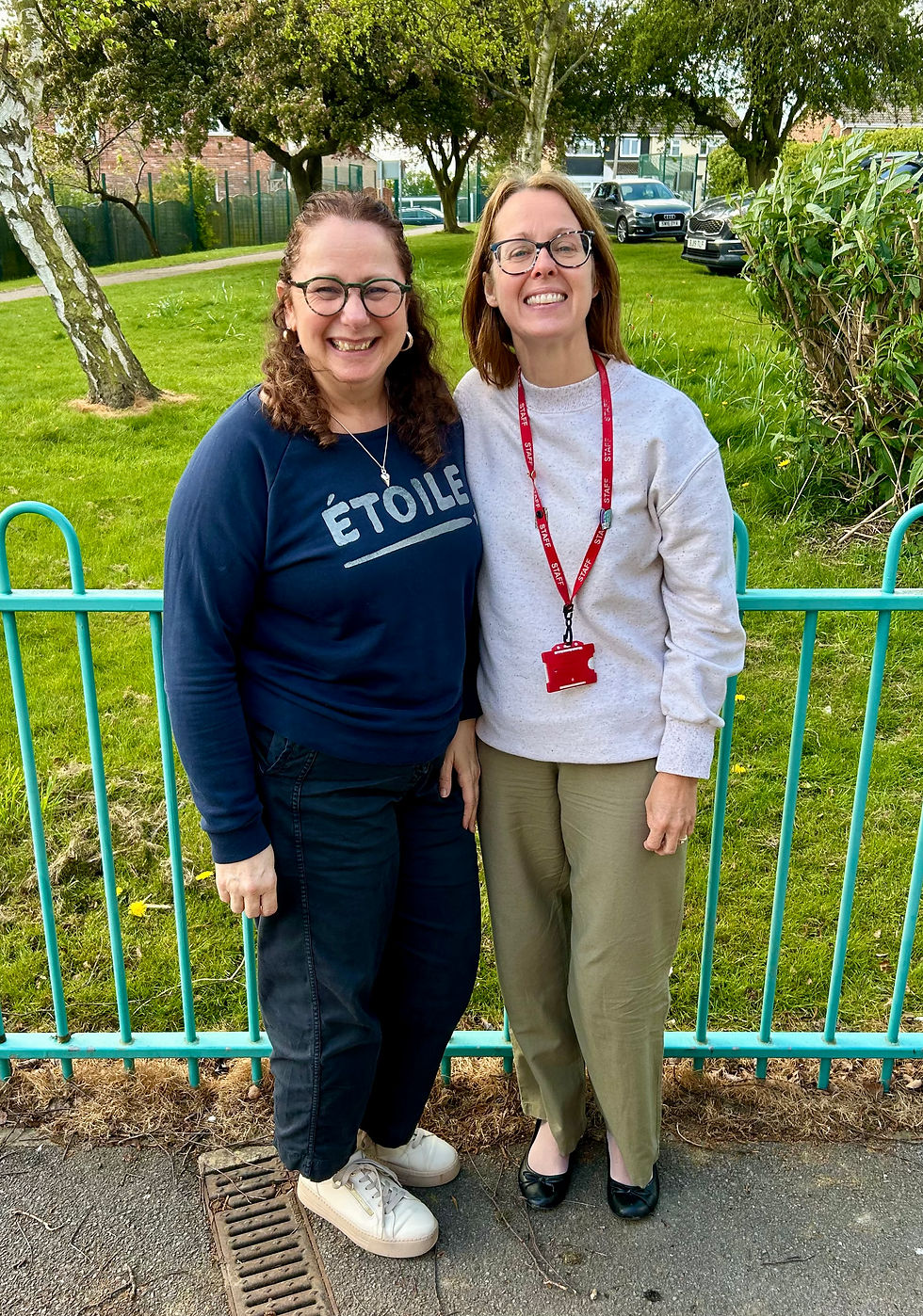
At Park, an incredible special school in one of the most deprived communities in England, an exceptional staff team came together last week to commit to a shared programme that goes well beyond PE.

An active form time programme to start every day with movement and belonging. A RISE Up Sport Sanctuary to boost attendance. A targeted RISE Up intervention for their most vulnerable young people. A whole school, moving together, for the children who need it most.
Different schools. The same belief. The best wellbeing programmes are not handed to schools. They are built with them.
Why This Moment Matters for Your Setting
Since 2020, we have partnered with over 300 schools and documented the impact across more than 40 case studies covering primary and secondary, urban and rural, SEND specialist and mainstream settings across England.
Every one of them tells a version of the same story: when relationships come first, everything else follows. You can read those case studies here.

The Game On report will shape PE curriculum development, Ofsted scrutiny and school wellbeing strategy for years to come.
The schools and trusts already building inclusive, movement-rich, relationally grounded cultures are not just doing the right thing. They are ahead of where policy is heading.
The schools partnering with us now are not just ahead of the curve. They are the evidence base the curve is being drawn from.
The question is not whether this matters. It is whether your setting is ready to move.
Want to Take the First Steps to Improving Your Students' Wellbeing?
Step 1: Join Our Waiting List Join our waiting list HERE Explore partnerships, training, consultancy, speaking opportunities, or request your copy of Time to RISE Up.

Step 2: Complete Your School Wellbeing Scorecard Complete your School Wellbeing Scorecard HERE It takes just 3 minutes to map your current provision and identify the key areas to strengthen.

Step 3: Subscribe to Our Weekly Newsletter Subscribe to our weekly newsletter HERE Stay informed with the latest wellbeing insights and practical tools for your setting.
Have a brilliant week, and thank you for everything you do for your young people.
Neil Moggan and the Future Action Team
💛🤝🧠💪


I tutor first graders who are struggling readers and the sight word search lets me lock in Dolch lists by grade, saves me typing 50 words every week.
Wish I could save word lists across sessions but pasting from a notes doc works fine for now.