
Balancing the Nurture-Structure Highway - Breckland School Case Study

Why Relationship-Led Schools Can Still Hold High Standards
KEY IMPACT
31% reduction in behaviour points for a vulnerable student
19% fewer lesson removals and 12% fewer suspensions school-wide
27% improvement in student mental wellbeing
School Wellbeing Scorecard increased from 65% to 92%
This case study covers: Balancing Nurture and Structure | Trauma-Informed Practice | Internal Provision | Whole-School Culture | Behaviour Without Exclusion | Movement for Regulation | Leadership | Belonging | High Expectations
Breckland School is a secondary school based in Brandon, Suffolk, and is part of the Unity Schools Partnership.
The school serves a diverse community and is on a clear journey of improvement, driven by a strong moral purpose: ensuring that every child feels safe enough to learn, valued enough to belong, and supported enough to flourish.

The school is exceptional at balancing one of the biggest challenges in education: finding the appropriate balance along the nurture–structure highway.
When schools get this balance right, they are able to manage challenging behaviour without retraumatising children, while still maintaining the high standards young people need in order to thrive and flourish.
Like many secondary schools, Breckland supports a small number of pupils whose experiences of adversity, disrupted attachment and unmet needs can present as behaviour, disengagement or emotional dysregulation.
Rather than viewing behaviour through a purely punitive lens, the school has made a deliberate commitment to understanding what has happened to children, not what is wrong with them, while maintaining the high expectations that all young people deserve.
This case study focuses on Breckland’s work with a small group of vulnerable boys within their Internal Provision, led by the brilliant Lisa Strutt (Internal Provision Lead) and Doug Hynd (PE Teacher), before zooming out to whole-school improvement where we hear from the inspirational Ben Willgress (Deputy Headteacher) and the highly innovative James Chapman (Headteacher).
This work forms part of the Suffolk RISE Up programme, delivered in partnership with Future Action.
This is the most in-depth case study we have produced to date. We have chosen to go deeper than usual because Breckland School is addressing some of the most complex and persistent challenges facing education nationally in the post-lockdown landscape, and doing so with clarity, courage and integrity.
We hope this case study offers inspiration and practical ideas that you can adapt and apply within your own context to support the young people you serve.
Intent – Why This Work Was Needed
In July 2025, Breckland School and Future Action co-created a bespoke RISE Up strategic plan to support a small cohort of boys within the Internal Provision who were experiencing significant challenges with behaviour, emotional regulation and social integration.
The shared intent was to:
Develop a bespoke RISE Up programme tailored to individual need
Create a safe, structured and nurturing environment to support regulation
Foster belonging, connection and unconditional positive regard
Equip pupils with emotional, physical and social tools to thrive
Support dignified reintegration into mainstream lessons where appropriate
Central to this work was building protective factors that mitigate the lifelong impact of Adverse Childhood Experiences (ACEs), while strengthening consistency and relational trust across the school.
As Internal Provision Lead Lisa Strutt explained:
“We wanted a provision that helped our children feel safe and valued, but also capable, not written off.”
Implementation – What This Looked Like in Practice
A Bespoke RISE Up Model
The programme combined weekly targeted intervention with daily relational practice.
Weekly RISE Up sessions alternated between:
Theory-based sessions with Lisa, focusing on self-care, emotional literacy, confidence and aspirations

Practical RISE movement-based sessions with Doug in PE
Mixed-age groupings, initially a concern, quickly became a strength as older pupils supported and modelled regulation for younger boys.
Fuel – Move – Learn – Love
This simple framework became the foundation of the Internal Provision.
Fuel
Many pupils arrived at school hungry or already dysregulated. Breakfast provision: tea, toast and a breakfast bar, funded through Pupil Premium and supported by local businesses ensured basic needs were met. What began as targeted support later expanded into the Happy Shed, an inclusive whole-school offer that reduced stigma.
Move
Practical RISE movement-based sessions, led by Doug in PE, were used intentionally to support regulation, belonging and connection, rather than as a reward or sanction.

Sessions were carefully structured to help pupils regulate their nervous systems, feel part of an inclusive group and experience success through movement.
Across the wider day, staff also embedded walk-and-talks and short movement breaks, helping pupils to re-regulate before challenges escalated and supporting smoother transitions back into learning.
Learn
Once regulated, pupils engaged in academic learning and targeted elements of the RISE Up self-care curriculum, including confidence, self-kindness, understanding worries, healthy habits, social skills and aspirations.
Love
Connection sat at the heart of everything. Emotionally available adults, time, consistency and unconditional positive regard were prioritised.
Small moments mattered, from a daily cup of tea and a game of Monopoly, to vocational activities that helped pupils feel useful and develop purpose.
As Lisa reflected:
“This has helped our children feel useful and develop a real sense of purpose.”
Pupil Wellbeing Impact
Staff-completed WEMWBS data for boys participating in the RISE Up programme showed a 27% improvement in wellbeing, with the strongest gains in:
Feeling close to others
Sense of agency and decision-making
Optimism about the future

Alongside this, Breckland’s School Wellbeing Scorecard improved from 65% to 92%, representing a 27% improvement from a high starting point and evidencing a wider shift in consistency, confidence and provision.


Student Vignette – Year 9
One Year 9 child with SEND, Looked After Child status, Pupil Premium and Child in Need support illustrates this impact clearly.
Summer Term 2025 (12 weeks time frame pre-RISE Up):
Behaviour points: -223
Negative incidents: 100
Autumn Term 2025 (16 weeks timeframe during RISE Up):
Behaviour points: -153
Negative incidents: 74
This represents a 31% reduction in negative behaviour points and a 26% reduction in negative incidents, alongside improved regulation, reflection and relationships with adults.
Culture Before Programmes: Connection Before Correction
Zooming out beyond Internal Provision, a defining strength of Breckland School is how effectively it balances care and challenge across the whole school.
Behaviour is not ignored and standards are not lowered. Instead, expectations are held calmly, consistently and relationally, ensuring pupils are not retraumatised through shame or threat.
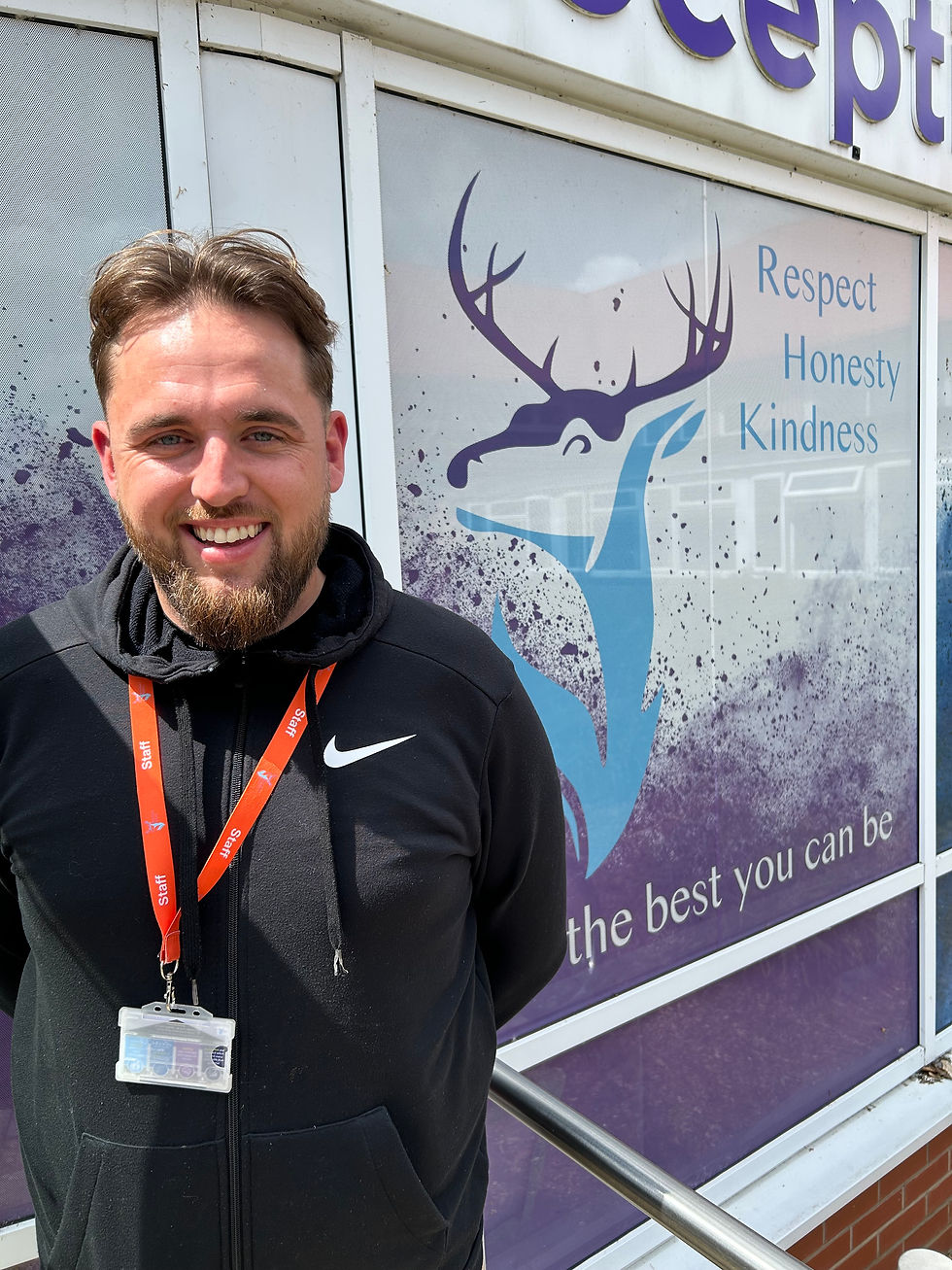
As Deputy Headteacher Ben Willgress explains:
“In terms of the impact, it’s not down to one thing. It’s about the culture we’re building in school and all the small things done well.
Prioritising relationships, knowing our children, the Student Support Centre, line-ups and routines, the HIVE and SEND support, the house system, the Internal Provision and what that offers, and the RISE Up programme. All of this contributes to the bigger picture.”
Whole-School Impact: Culture at Scale
Autumn Term 2025 compared with Autumn Term 2024
A Culture Shift Built on Care, Consistency and High Expectations In just 1.5 terms of leadership, the school has secured a clear and measurable shift in culture.
This has been driven not by structural change alone, but by the daily commitment of staff to create classrooms that are calm, purposeful and welcoming, while maintaining uncompromising expectations for learning and behaviour.
Professional development has focused on helping staff balance warmth with clarity — over-narrating expectations, using de-escalation strategies with confidence, and embedding pedagogical approaches that ensure all students experience success while remaining fully included through a clear “no opt out” expectation.
The impact of this work can be seen not only in improved data, but in the lived experience of students and staff across the school. It is crucial to highlight that the data shown below sit alongside the raised and clarified expectations.
Systems are now applied consistently for persistent disruptive behaviour and not only reserved for more extreme behaviour incidents.
This school is championing “sweating the small stuff” alongside developing interventions to prevent repeat incidents of behaviour policy breaches at all levels. Whilst early in their journey, it is already clear to see that this trend will continue as they develop and refine processes further.
Fewer Suspensions, Earlier Support
Total suspensions have fallen by 12%
The number of students receiving more than one suspension has reduced by 17%.
These reductions reflect a school where issues are increasingly being addressed earlier and more effectively.
4 students made up 46% of suspensions in the Autumn term
The school chose to support these students and intervene using a variety of support mechanisms over the decision to permanently exclude.
Without the 4 students, the school's data would have seen a 44% reduction in suspension numbers
However the school believes it is their moral responsibility to support these individuals to become fantastic future citizens
Breckland has chosen to protect life chances, not just headline figures.
Internal Provision as a Space for Regulation and Repair
Use of the Reconnect Room has reduced significantly, particularly for students with the highest historical need.
Students logged 10+ times reduced by 28%
Students logged 20+ times reduced by 70%,
demonstrating effective regulation and reintegration.
Calmer Classrooms and Protected Learning Time
Overall lesson removals reduced by 19%,
There has been a 47% reduction in individual pupils removed from lessons.
These figures represent hours of reclaimed learning time, not just for those individuals, but also for all peers in the learning environment.
Pastoral Work That Builds Confidence
Pastoral teams now have the ability to intervene proactively, supporting students to build confidence, resilience, and a willingness to “do hard things” rather than opting out of learning.
Scaling What Works
Building on the learning and success of the internal provision, the school is now deliberately scaling these approaches across the whole community. What proved effective for some is now being made available to all.
This includes the introduction of free breakfast for every student, every morning — not as an optional club, but as a consistent, universal routine that supports regulation, readiness to learn, and a sense of belonging from the start of the day.
The morning offer is intentionally designed to do more than meet basic needs.
Through house-based activities, movement, and shared experiences, students begin the day connected to peers and staff, “experiencing glimmers of joy” alongside clear expectations.
Opportunities to move, interact and feel known sit alongside gentle academic and pastoral engagement.
This marks a deliberate shift away from a traditional, admin-led start to the day towards a Fuel–Move–Learn–Love approach, one that prioritises regulation, belonging and readiness, while reinforcing the school’s high expectations for behaviour and learning.
Looking Ahead
This marks the beginning of a sustained journey of improvement, with continued
commitment to evolving the whole-school offer further, ensuring that this crucial shift continues to deepen and translate into sustained academic and personal success for all of the Brilliant Breckland School students.
Leadership With Moral Purpose
Senior leaders at Breckland are clear that this data must always be understood in context.

As brilliant Headteacher James Chapman explains:
“It’s important to say that four children within the school are currently responsible for around 60% of the behaviour data, both internally and externally.
In many schools, these children would likely have been permanently excluded. Morally, we have taken the decision to continue supporting them because we know the devastating impact permanent exclusion can have on a child’s life chances.”
Rather than pursuing cleaner data through exclusion, Breckland’s leadership team have chosen the harder, braver path. Holding boundaries, maintaining standards, and continuing to invest in children with the most complex needs.
At Future Action, we strongly applaud this approach. Sometimes, some schools exclude quickly and allow other schools, services or wider society to pick up the pieces.
Breckland has chosen to protect life chances, not just headline figures.
A Common Pain Point for Schools: Finding the Right Balance
One of the most common challenges faced by schools at the moment is finding the right balance between nurture and structure.

Too much nurture without clarity can lead to inconsistent expectations and, in some cases, children inadvertently running the school.
Too much structure without relationships may create short-term compliance, but often leaves young people feeling controlled, disengaged or miserable, stifling creativity, initiative and long-term engagement with education.
Neither extreme helps children flourish.
One of the greatest challenges for educators is finding the appropriate balance, recognising that this balance will vary from child to child depending on their individual story, SEND needs and any adverse childhood experiences they may have suffered.
Challenging a Common Myth: Trauma-Informed Does Not Mean “Soft”
A common criticism of trauma-informed practice is that it is “flaky” or lacking rigour. At Future Action, we fundamentally disagree based on experiences implementing within my own school.
When trauma-informed practice is applied well and with clarity, the opposite is true. The more psychological safety we create, the more we can challenge young people, because they remain within their window of tolerance for longer.
When pupils feel safe, understood and connected:
They are more receptive to feedback
They recover more quickly from mistakes
They are more willing to take risks in learning
High expectations can be held without triggering threat responses
Breckland School provides a powerful, real-world example of how this balance can be achieved in practice.
Why This Matters for Suffolk RISE Up
Breckland School demonstrates that trauma-informed practice and high standards are not opposites.
When relationships, routines and regulation are woven together consistently, schools can reduce exclusions, calm classrooms and help vulnerable young people re-engage meaningfully with education.
This case study shows that sustainable improvement is not about one programme.
It is about creating a culture where clarity, care and courage enable every young person to flourish.
Looking Ahead
The work at Breckland School is far from finished.
We are delighted to announce that Breckland School and Future Action will be continuing our partnership throughout the next academic year, building on the exceptional foundations established during the first phase of the Suffolk RISE Up programme.
The next stage of this journey will see the school move from targeted intervention towards a truly whole-school approach, introducing a tiered model of support alongside an innovative wellbeing tracking system that will help staff identify emerging needs earlier, evaluate impact more effectively, and ensure every young person receives the right support at the right time.
As Headteacher James Chapman recently shared:
"High expectations don't change. We simply become better at helping every student reach them."
We believe this perfectly captures the next chapter of Breckland's journey.
By embedding movement, relationships and regulation into the everyday life of the school, Breckland continues to demonstrate that wellbeing and academic excellence are not competing prioritie, they strengthen one another.
We are incredibly excited to continue partnering with James, Ben, Lisa, Doug and the entire Breckland team as they continue to lead with courage, compassion and innovation.
We look forward to sharing the next chapter of this journey and the impact it will have on the lives of every young person at Breckland School.
With Thanks
We would like to finish by saying a huge thank you to Lisa Strutt, Doug Hynd, Ben Willgress, James Chapman and the entire team at Breckland School.
The work taking place at Breckland reflects exceptional care, courage and professional expertise. It is clear that this is not about quick fixes or surface-level change, but about creating the conditions where young people, especially those who have faced significant adversity, feel safe, valued and supported to grow.
Your commitment to holding high standards alongside compassion, choosing relationship over rejection, and doing the hard work of culture change is giving your young people the very best opportunity to flourish, both now and in the future.
Thank you for trusting us to walk alongside you on this journey, and for your willingness to share your learning so openly.
We hope this case study inspires schools across Suffolk and beyond to see that it is possible to combine uncompromising expectations with deep care, creating cultures where every young person can belong, thrive and succeed.
Could this be the start of something for your school?
Step 1: Join our Waiting List
Explore partnerships, training, consultancy and speaking opportunities, or request your copy of Time to RISE Up.

Takes 3 minutes to map your current provision.

Thank You
Have a brilliant week, and thank you for all that you do for your young people.
Neil Moggan and the Future Action team
💛🤝🧠💪



Comments