
How Winston Churchill School is Transforming Girls’ Engagement and Wellbeing with RISE Up

Updated: Nov 18, 2025
Winston Churchill School in Woking is a large, inclusive secondary school that prides itself on providing a broad and enriching PE experience for all students.
As part of the Surrey RISE Up programme in partnership with Active Surrey, the school has been on a journey to transform girls’ engagement in PE and use movement as a powerful tool for belonging, wellbeing, and achievement for all their young people.

Amy Kovic, Director of Sport, has led this journey with energy, creativity, and determination.
Intent
“As a PE team, we wanted to tackle one of our long-standing challenges – girls’ engagement in physical activity.
Too often, we saw girls stepping back from PE or only dipping into extra-curricular opportunities.
Our vision was to change that by developing a real sense of belonging, building their confidence, and raising the profile of girls moving across the school.
We wanted our young people to see that PE isn’t just about sport – it’s about movement for life, movement for wellbeing, and movement for connection.”

Implementation
The RISE Up programme became the foundation for reimagining how PE was delivered.
“We started by embedding RISE Up principles into our PE curriculum, giving each year group a unit that allowed them to experiment with different ways of moving and reflect on what worked for them.

Our Year 11s had the agency to choose their activities, which made PE meaningful and relevant to them as individuals.”
But the journey didn’t stop there.
“We wanted to create moments that girls would remember – times when movement brought them together.

Our netball club is a great example. We usually had around 20 girls attend, but this year we had 45 turn up.
The buzz was incredible, and it was no longer just the same group of girls – it was a real mixture.
The trip to PGL Swindon in March really brought them together. We introduced a teddy bear mascot that travelled between year groups, encouraging students to cheer each other on and celebrate each other’s achievements. Evenings were phone-free so that girls could talk, bond, and connect.

We tied everything back to our school’s five competencies – communication, collaboration, resilience, analysis, and ingenuity.”
Other events followed.
“In May, Tam de Bunsen led our ‘Let Girls Try’ event – all of Year 8 girls off timetable, placed into friendship groups to help them feel safe, and supported by Year 9 female sports leaders.
They played tag rugby, football, and rounders, with problem-solving challenges woven in. The atmosphere was brilliant – the girls were comfortable, connected, and willing to have a go.

We repeated the model for Year 7 with ‘Let Girls Play’, which gave them another safe, inclusive experience of movement through team games.”
The whole school felt the change.
“On the final day of term, we wanted to give our young people something special. We ran a Colour Run – prefects helped us, staff joined in, and the whole school came together. It wasn’t about competition, it was about joy, celebration, and leaving for the summer feeling bonded and proud.”

Amy and her team also took the inclusive teams approach into their exam groups. “Our GCSE PE students had often been separated into three groups, but this year we worked hard to bring them together as one.
They supported each other, built strong relationships with staff, and created a real team culture. That sense of connection had a direct impact – our results improved dramatically, with a 20% increase in Grade 4–9s compared to the previous year.”

Impact
The results of the programme speak volumes.
“In just seven months, our School Wellbeing Scorecard jumped 48% from 42% to 90%.
That shift represents something much deeper – a culture change in how our young people feel about PE and movement.

Girls’ extra-curricular attendance has soared, fewer students need to borrow kit because they actually want to take part, and behaviour incidents linked to disengagement have fallen away.”


Relationships have been at the heart of it.
“We as staff are much more conscious of creating environments where girls feel safe, included, and able to thrive.

Our connections with students are stronger, and the girls’ friendships with each other are flourishing too. It feels like PE is finally the space we always wanted it to be – one where every young person belongs.”
From Struggling to Flourishing
One Year 9 girl’s story captures the essence of the programme.
“When I first met her, she carried herself as though she wanted to disappear. She rarely spoke up in lessons and often told me she didn’t see the point in trying.
On the wellbeing scale, she marked herself at the lowest end in almost every area — no optimism for the future, little sense of usefulness, and no belief she could manage her own wellbeing.
Her average score was just 1.75 out of 5. It was a stark reflection of the struggles she was carrying each day.”
What made the difference was not a single moment, but a safe environment where she knew she was seen and valued.
Empathetic relationships with teachers gave her the trust and security she needed, and the inclusive teams approach in RISE Up meant she was never left on the sidelines.
Slowly, she began to connect with her peers — and some of those teammates have now become real friends.
Movement became her anchor. She learnt breathing exercises when her anxiety rose, how to use activity as a way to release stress, and how to support others in return.
The small steps she took each week built into something bigger: a sense of belonging and confidence she had not felt before.
“By the end of the first phase of the RISE Up programme, her story had shifted. When we revisited the wellbeing scale, every single score had risen.
She now describes herself as often optimistic, often useful, often able to manage her own wellbeing. Her average score more than doubled to 3.9 out of 5 — a 121% improvement.

But the numbers only tell part of it. She laughs more readily, talks about her future, and counts her new teammates as her friends. For me, that’s the real success.”
Moving Forward
The next stage of the journey is about deepening the offer for our most vulnerable young people. “We are developing RISE Up Sport Sanctuaries – smaller, intentional spaces where students can regulate, reflect, and build confidence through movement.
For one group of Year 8 girls, the focus will be on communication and self-esteem. For some of our Year 8 boys, it will be about regulation before lessons to set them up for success.
These sanctuaries will allow us to replace some morning tutorials with movement-based interventions that meet students’ needs in a safe and supportive way.”
Amy is also planning to replicate the girls’ programme with boys to make sure everyone experiences inclusive, meaningful movement.
The vision is for RISE Up Sport Sanctuaries, inclusive clubs, and enrichment opportunities to sit alongside core PE and curriculum changes, creating a joined-up, whole-school approach.

Amy sums up the RISE Up programme best:
“It just makes sense for what young people need. It’s such a clear way to help students understand how important moving their body is for their long-term health. It shows how important PE is and raises its profile – it’s about so much more than sport.”
Final Word
Thank you to Amy Kovic and her brilliant team at Winston Churchill School. Your commitment to creating meaningful PE experiences for all students is inspiring.
The impact you’ve achieved in such a short time shows what’s possible when movement, relationships, and belonging are placed at the heart of education.
It has been such a privilege for Future Action to walk alongside you on the first steps of your Surrey RISE Up journey and there is plenty more to come.
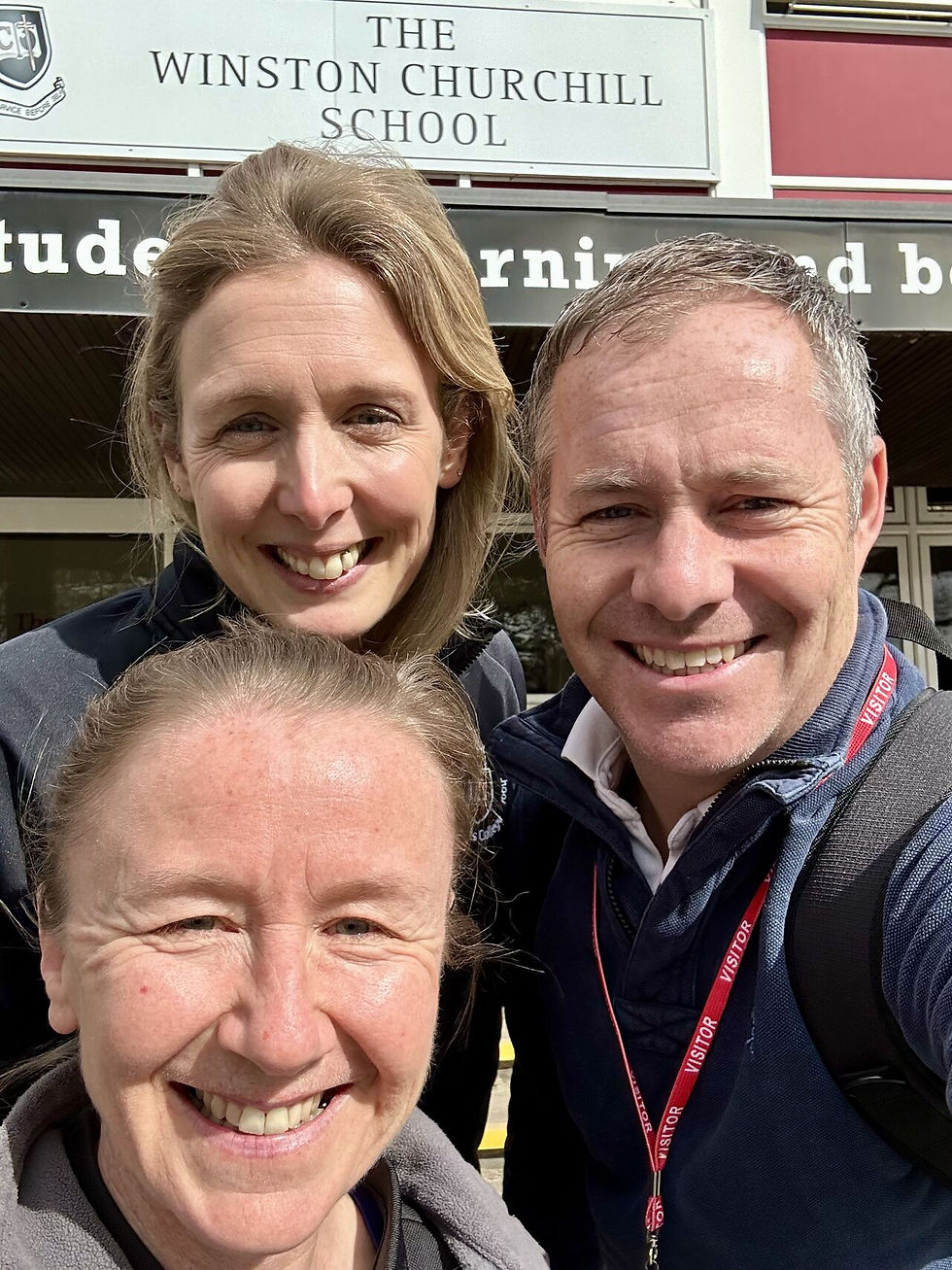
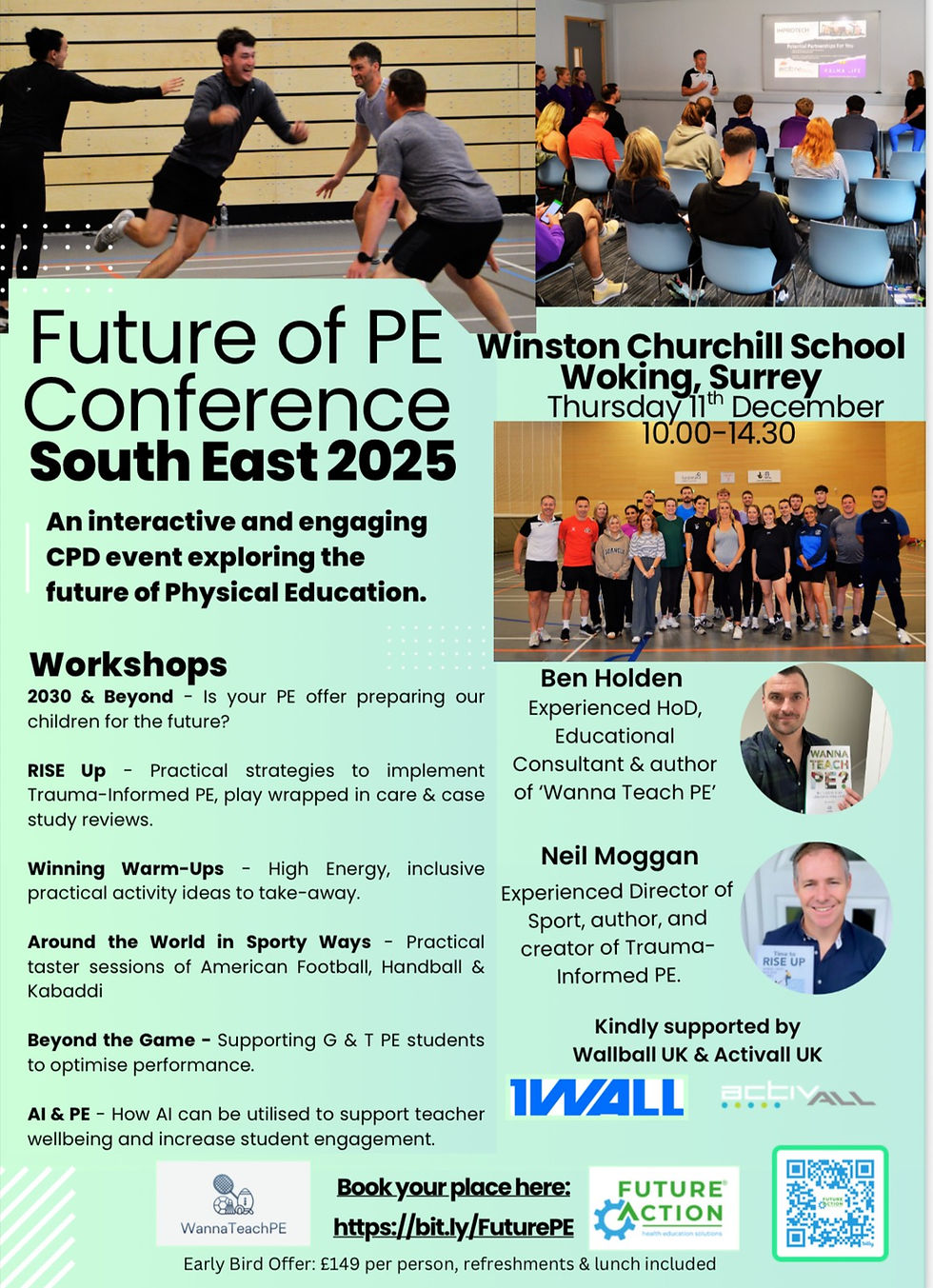
Amy will be presenting her teams journey at the Future of PE South East conference on Thurs 11th December at Winston Churchill School.
Why not come along to hear from Amy and ask her questions about how you can replicate something similar in your school. You can get your ticket here:
We'd all love to meet you.
Take the First Steps to Improving Your Students’ Wellbeing 🚀
✅ Step 1: Join our Waiting List
Explore partnerships, training, consultancy, speaking opportunities, or request your copy of Time to RISE Up.

📝 Step 2: Complete Your School Wellbeing Scorecard
It takes just 3 minutes to map your current provision and identify key areas to strengthen.

💌 Step 3: Subscribe to Our Weekly Newsletter
Stay informed with the latest wellbeing insights and practical tools for your setting.
Have a brilliant week — and thank you for all you do for your young people.
Neil Moggan and the Future Action team


Comments